

On Stage. Hiding out.
Nobody can see me up here.
I asked my college girlfriend if she had any old pictures she could share from back in the day. Seems I’ve been carrying around the same ratty twenty-seven photos I have from that time and hoped to have a few extra.
Apologizing for the “pictures of pictures,” she sent a batch. Some I remembered, most were hazy at best. But then I saw this one and I was shook.
It was this kid. Me.
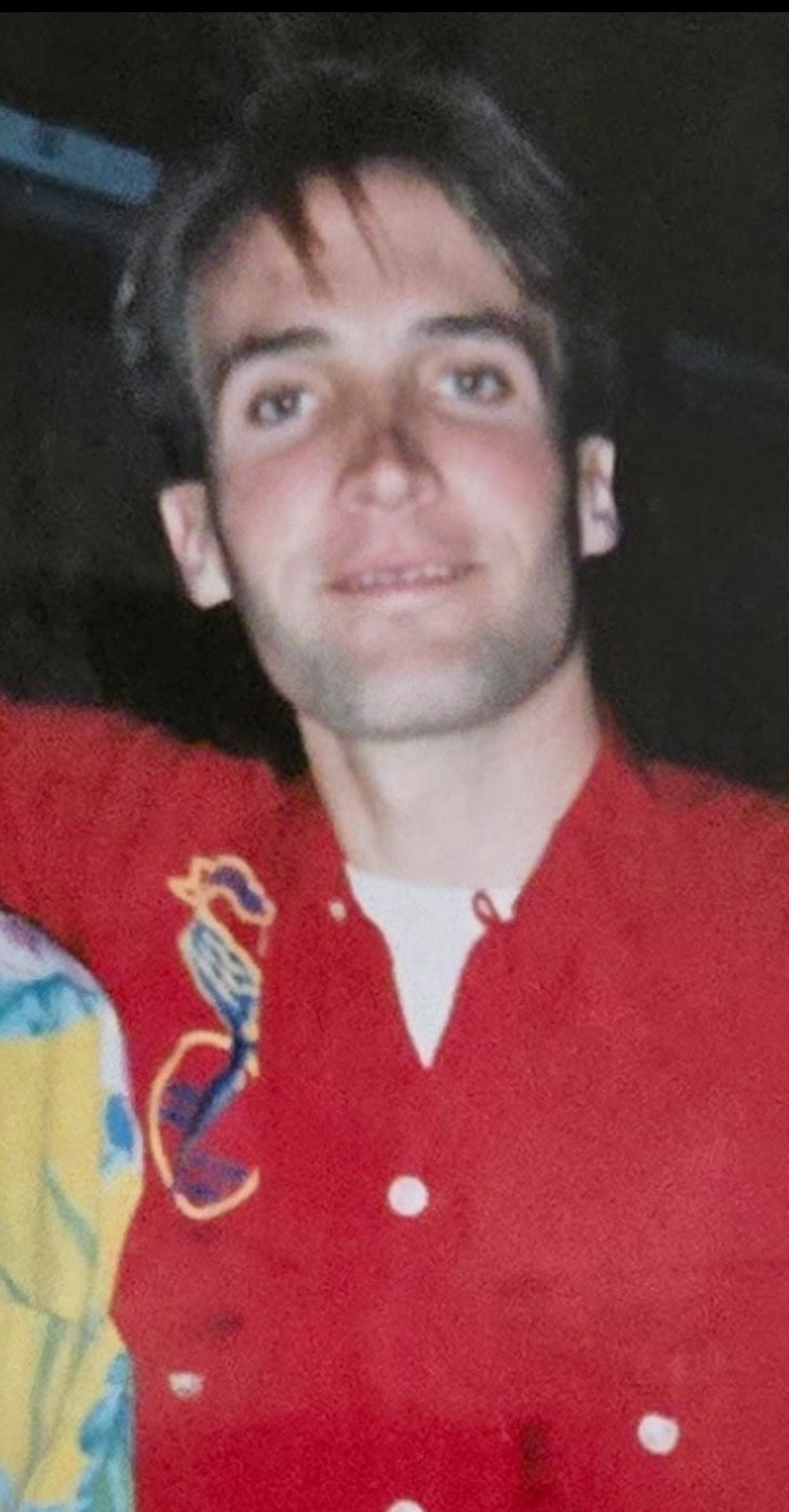
It’s at a Halloween party and I knew right away what he was hiding. I could see it behind his eyes. Because he was me, and I used to be him.
He’s in a sea of chaos that he knows, in the pit of his stomach, is bad, but he won’t tell anyone about it.
It’s two months since his fingers were crushed in a pizza roller and two months since he went to a class. Any class. It’s also two years since he quit the cross-country team and two years of shame because he didn’t tell his coach. I also know that it’s four months before he gets a letter from NAU kicking him out of school.
I know he sometimes thinks about joining the Army because he associates the Army with discipline and getting his life together.
He was already on a road he’d paved for himself years earlier.
I remember he’d been offered an academic scholarship to NAU based on grades, test scores and class rank. He finished 11th at the state cross-country meet on a hilly 5K course that broke most runners. People hear “11th” and shrug, but eighteen of the top twenty ran in college. One made the 1992 Olympic team.
I went to pre-registration at NAU in June 1985. The coach looked surprised to see me but said he’d love to have me on the team. I ran that weekend with some of the guys on the team, and by Sunday he said I could walk on in the fall semester.
I was in. Until I wasn’t.
A month later at a summer track camp, the Glendale Community College coach and his runners told me I needed to “develop” at a junior college if I wanted to be any good. And I believed them, because my self-doubts about not being good enough were ready at any moment to turn into facts.
I called my mom from the pay phone. She was confused and shocked, but tried to sound positive. I didn’t realize then she was disappointed. My high school girlfriend, Leslie, was furious.
I’m sad for that kid. Sad in a way where I know it works out, but sad he didn’t have a strong role model in his life — sad that he never learned to ask for help.
And the truth is, that’s when the hiding started — long before the microphone, long before the pizza roller, long before NAU kicked me out.
I have a similar picture of me at that same Halloween party in 1989. Up on stage, I told myself everything was fine, cracking jokes and getting the crowd excited. Not the truth that Julie’s picture exposed.
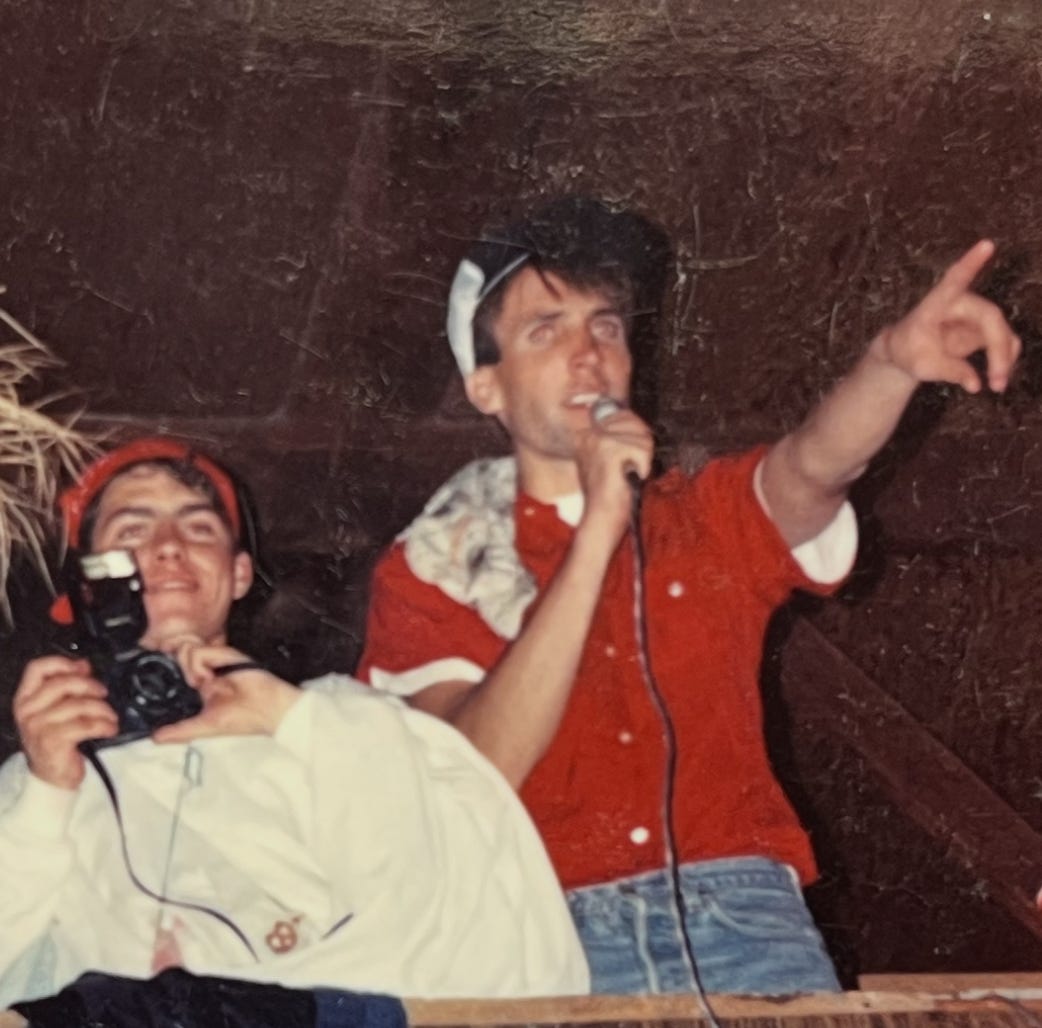
This was usually the routine at most parties — me on the mic — because just the year prior, I’d found my way into the journalism department and a gig on the college radio station.
I’d been hired at KNAU, the NPR affiliate at the university, as a news producer and host of the local “Afternoon Edition.” Reel-to-reel tapes of interviews with John McCain, Bruce Babbitt and other big names in Arizona politics are still stashed in my closet. I thought you could call anyone and they’d talk to you.
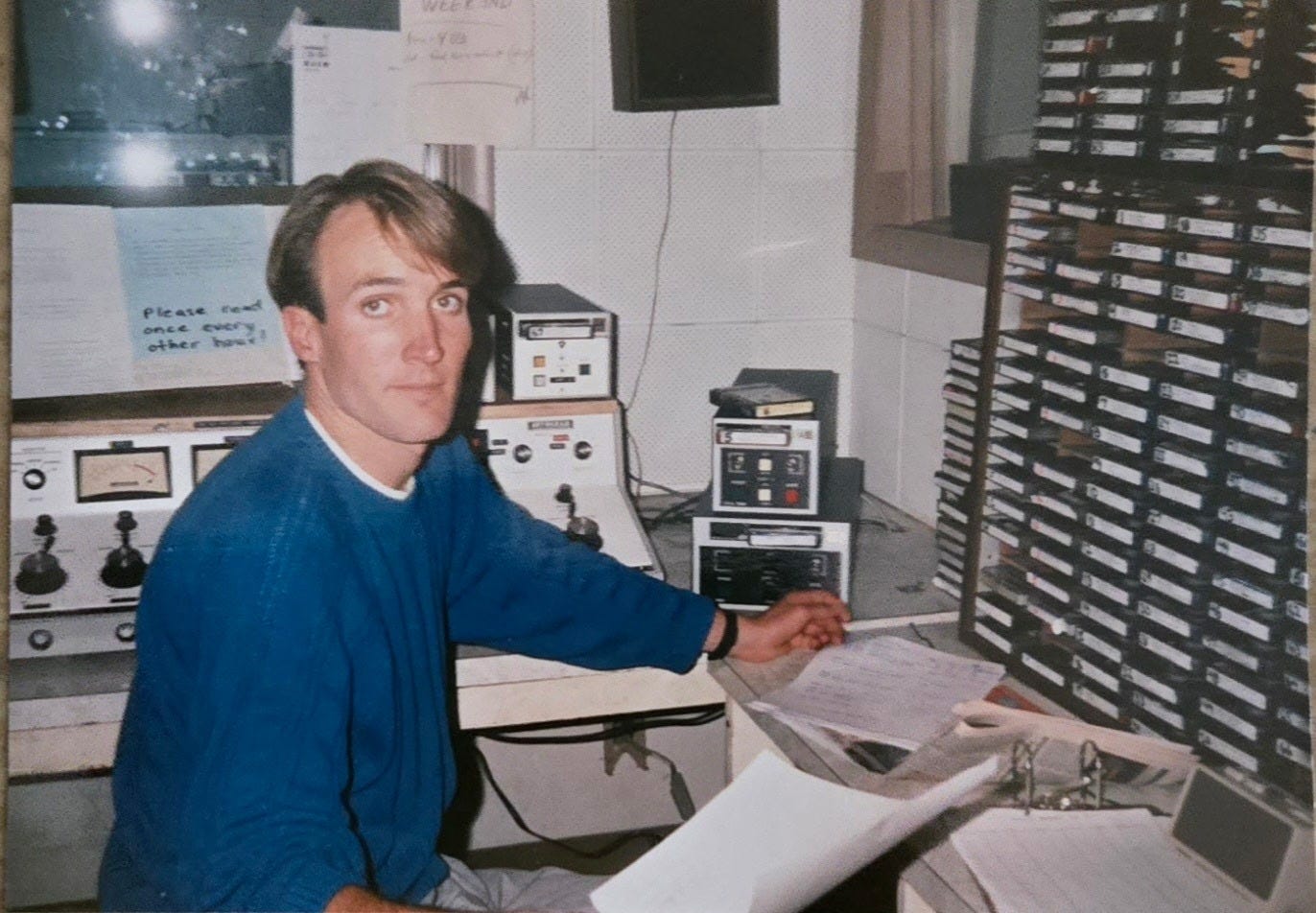
I’d get kudos, awards and recognition during that time. But I was always just a kid hiding behind the microphone.
The microphone had become a way for me to hide out, because I was good at it. How do I know? I had a short-lived comedy career in 1990.
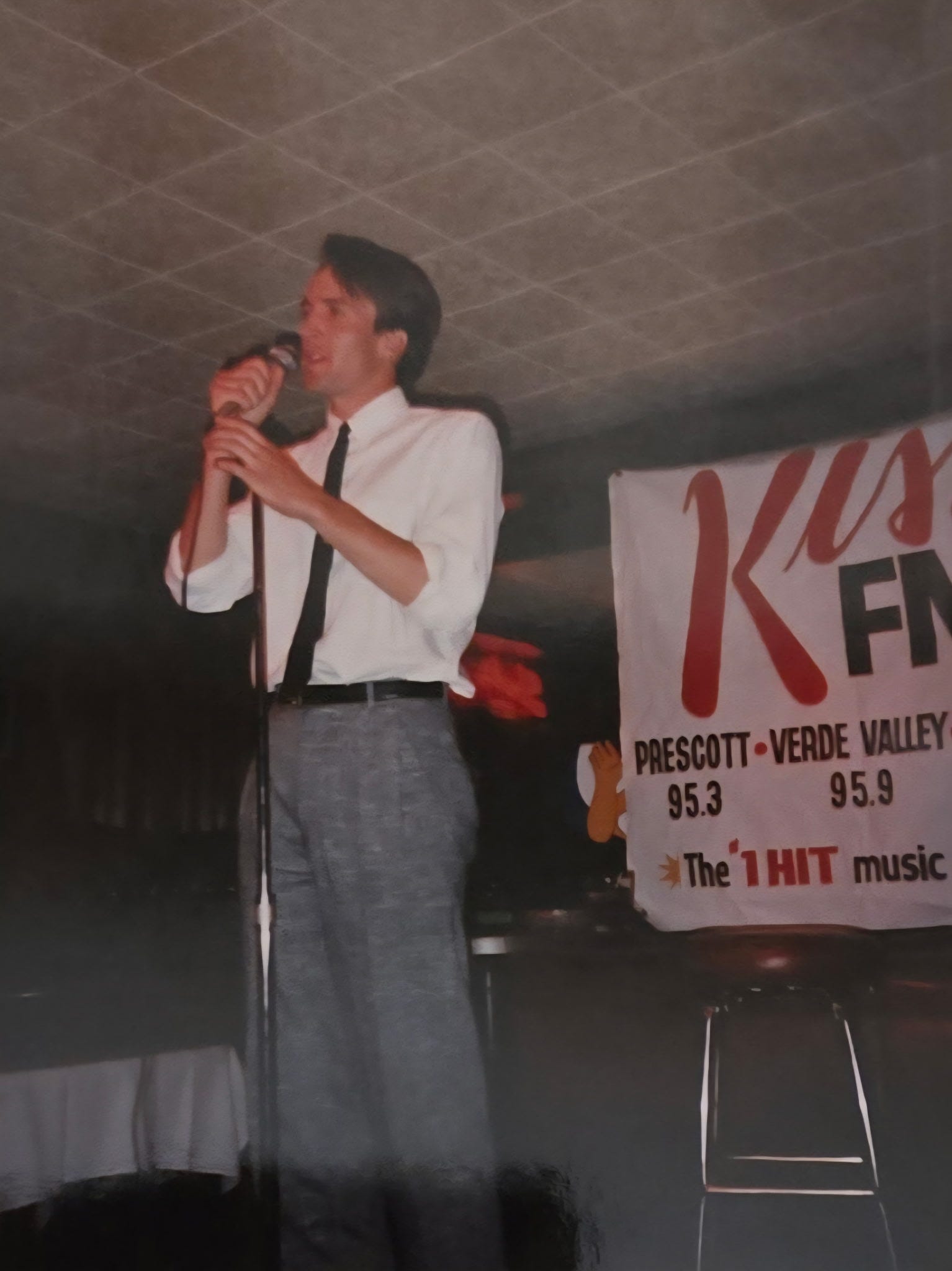
I had a sad laugh when Julie’s picture came through, remembering my five-minute set as the host and intro of those weekly shows. Laughing because my jokes were bad, and sad because I used it as an excuse not to go to class. I also laughed at my standard comic uniform of the day: skinny tie, white shirt and three-pleat pants.
Back then, the Monte V was a divey joint. I might have made $10 and a couple drinks as co-host of those weekly shows. One time I placed second in a contest, bummed because the prize was only a free pass to the host bar for a year, which hilariously enough turned out to be worth about $400 in saved cover charges.
This is where the three rules of karaoke came from:
Don’t go first.
Wait until the crowd has had a few drinks.
Sing a song everyone knows.
Today I usually end the story saying, “Number four: Always sing with someone who can sing. That applause is for you, too.”
But back then, I had a kicker about meeting girls:
“Number four: Always sing with a good-looking girl who can sing. She’ll get the applause, and other cute girls will think you can sing too, and they’ll come say hi. Great way to meet chicks.”
I also joked about applying for a job at a country music station, because in real life, I really was trying to get a job at a country music station in Phoenix.
“I applied for a job at the country station the other day. I’m serious about getting this job, too. I bought a cowboy hat, talk with a drawl now and started chewing tobacco. I even bought a gun rack — for my car.”
Heh.
As my world fell apart, I hid more and more behind the microphone. It allowed me to get kudos and a false sense of security in the sea of chaos I was living in.
As I look back on it now, I know being good at radio and comedy gave me an unfortunate confidence — thinking I could just sweep away all the bad things because I had this one talent.
Did it also mean that I wouldn’t ask for help or directions or guidance from anybody, for anything? That for years I would lean into things that I was naturally good at and dodge the hard things? That I would hide behind that mic to the point that my life would be in shambles?
Yep. I hid behind that proverbial microphone for years. It took Julie’s one picture to remind me.
Speaking of pictures, one thing I think I envy about today’s kids is the number of pictures they have. When I was coaching high school track and cross-country, there would be 500 pictures from one meet. I have a total of three from high school.
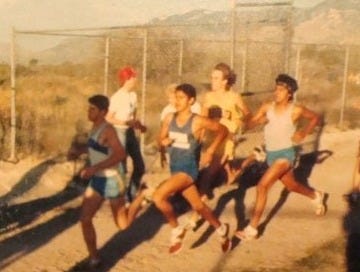
But now living in the digital picture era, I guess I’m thankful. Because when my life was at the bottom — cancer treatments, a stalled career and a broken marriage — it was a picture that saved me. Well, a picture of me with a microphone.
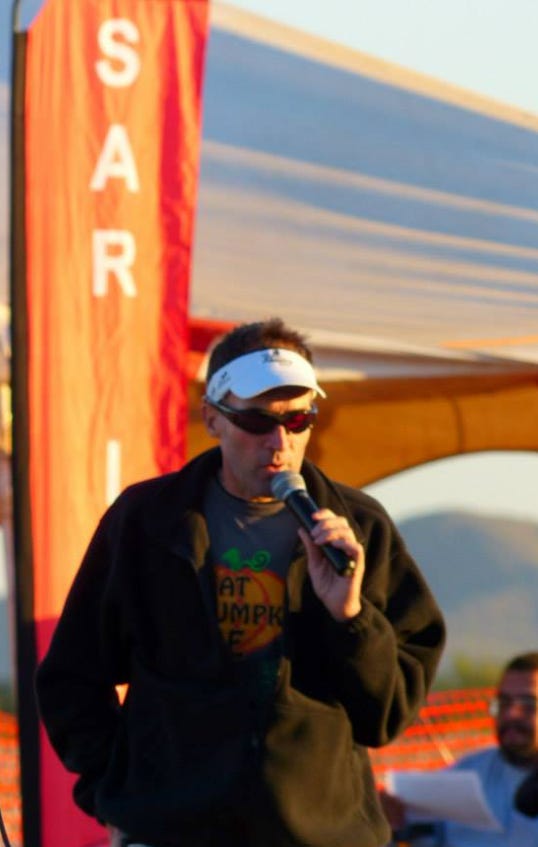
Taken the day before I began four years of cancer treatments in 2009, announcing at a local 5K, this picture still hits me hard. I was terrified that day, not knowing what was coming, yet trying to act like nothing was wrong. It reminds me that I have been through hard things, can do hard things and, most importantly, am not afraid of hard things.
It also reminds me that hiding behind the microphone is what ultimately made my voice powerful.
Today my voice inspires kids, excites people about running, focuses attention on important issues and helps people overcome life’s hardships.
I’m proud of my voice. Honed with those years hiding behind the mic.
When I was twenty-two, my voice and a microphone gave me a place to hide out and avoid everything that was going wrong. Years later, in a sea of sickness and hard times at forty-two, it flipped. Feeling confident at something, while everything else was going wrong became a refuge — a place where I couldn’t hide.
Perhaps those moments of shame, doubt and guilt we carry as kids can become a kind of guidance — a gift — for our future selves. Young Tim gave older Tim a gift — a microphone, a voice.
A place where he doesn’t have to hide.
I get asked every once in a while if these stories will be a book. Maybe, I think. But I better write some better jokes.
This is raw and powerful. Thank you for sharing.
I love this story. Great writing and shining a light in a dark place. Very brave of you. Good job Timmy!